
A precision fabricator gets ahead of its inspections
A sheet-metal and fabrication business in the West Midlands
The situation
Two sites, one part-time H&S coordinator, and a director who found out about the lapsed crane exam from the insurer.
Daily forklift checks were done on paper and filed weekly, so a defect on a Monday was read on a Friday.
COSHH assessments for cutting fluids and weld fume existed, but were three years old and stored on a laptop.
What changed
Import the register
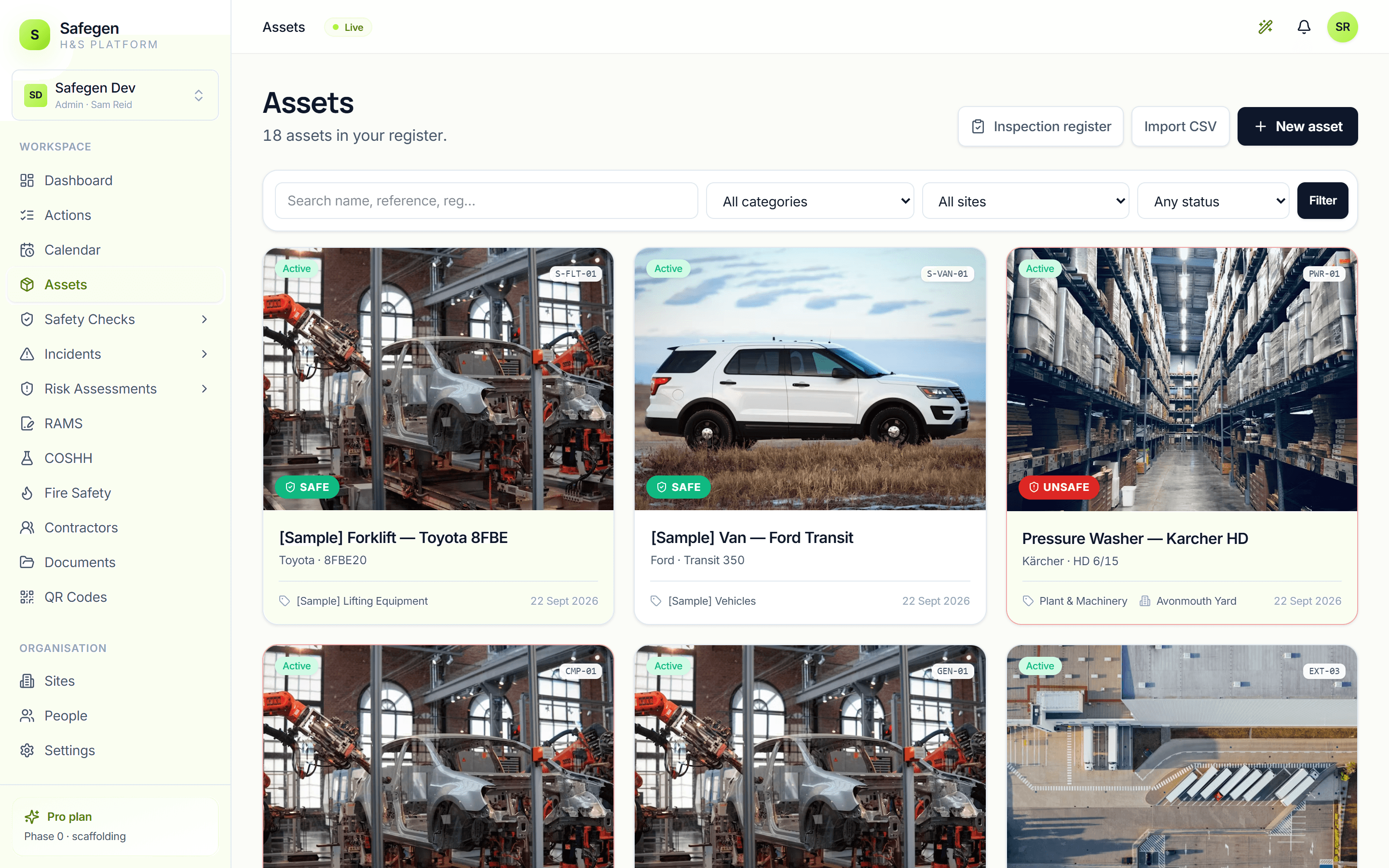
The asset spreadsheet was imported by CSV in an afternoon. Forklifts, MEWPs, the crane, slings and chain hoists took system templates, which brought LOLER, PUWER and service dates with them.
Put QR labels on the kit
Every forklift and MEWP got a label. Drivers scan before the shift; failed items raise a corrective action to the shift supervisor with a fix-by date.
Record the examinations
The last thorough examination for each item was recorded with its certificate reference and the report uploaded. Next-due dates rolled forward on the right interval.
Redo COSHH in one sitting each
Cutting fluid, weld fume, degreaser and paint were each entered as one record with the safety data sheet attached, exposure routes and controls captured, and signed off by the production manager.
Where it lands
Every statutory date on every lifting item is visible on one register, legal items first, with the evidence beside it.
A failed pre-use check on a forklift is an action within a minute, not a note read at the end of the week.
The compliance calendar shows the coming quarter of examinations, so the competent person can be booked once for a batch rather than piecemeal.
COSHH is current, signed and reviewable on a cycle the calendar keeps.
Run this scenario on your own manufacturing sites.
Thirty minutes. We walk through your assets, your people and your paperwork, and show you what the watch would raise on day one.